
Complete Guide to Sprinkler Irrigation Systems: Installation, Maintenance & Troubleshooting
After watching your neighbor’s lush, green lawn flourish while yours struggles through another St. Louis summer drought, you’ve probably wondered what their secret is. The answer isn’t a magic fertilizer or a green thumb—it’s likely a professionally installed sprinkler irrigation system working behind the scenes, delivering precisely the right amount of water at exactly the right times.
At Allen Outdoor Solutions, we’ve spent over 15 years transforming Missouri lawns through expert irrigation system installations. From the clay-heavy soils of St. Charles County to the challenging terrain of Jefferson County, we’ve seen firsthand how a properly designed sprinkler irrigation system can turn a struggling landscape into the neighborhood’s crown jewel. But here’s what most homeowners don’t realize: the difference between a system that saves you time and money versus one that becomes a costly headache all comes down to understanding what you’re investing in.
Whether you’re tired of dragging hoses around your property, frustrated with brown patches that never seem to recover, or simply want to increase your home’s value while reducing your water bill, this comprehensive guide will walk you through everything you need to know about sprinkler irrigation systems. We’ll share real insights from hundreds of installations across the St. Louis metro area, including the common mistakes we help homeowners avoid and the solutions that actually work in our unique Midwest climate.
What is a Sprinkler Irrigation System?
A sprinkler irrigation system is an automated network of underground pipes, valves, and strategically placed sprinkler heads designed to deliver water efficiently across your landscape. Unlike the basic oscillating sprinkler you might drag out on weekends, a professional irrigation system operates on programmed schedules, divides your property into optimal watering zones, and adapts to your landscape’s specific needs.
The core components work together like a well-orchestrated team: a main water line connects to a series of control valves that regulate water flow to different zones, while buried PVC pipes carry water to sprinkler heads positioned for maximum coverage. A central controller acts as the brain, automatically activating each zone according to your programmed schedule. Modern systems even include rain sensors that prevent unnecessary watering during storms and soil moisture sensors that adjust watering based on actual ground conditions.
What sets today’s sprinkler irrigation systems apart from basic sprinklers is precision and intelligence. Instead of flooding your entire yard with the same amount of water, professional systems create customized zones that recognize the different watering needs across your property. Your sun-baked front lawn receives different treatment than the shaded areas under your oak trees, while flower beds get gentle drip irrigation rather than heavy spray.
In our installations across St. Charles and Jefferson counties, we’ve seen how this targeted approach transforms not just the appearance of lawns, but also reduces water waste by 20-40% compared to manual watering methods. The system learns your landscape’s unique requirements and delivers exactly what each area needs, when it needs it.
Signs You Need a Professional Irrigation System
The telltale signs that your current watering method isn’t cutting it are usually obvious once you know what to look for. Brown patches that persist despite your best efforts often indicate inconsistent watering patterns—areas that receive too much water one day and not enough the next. These dry spots typically appear first in high-traffic areas or slopes where water runs off before soaking in, a common problem we address in many St. Louis area installations.
If your water bill has you questioning whether you’re irrigating your lawn or filling a swimming pool, you’re likely overwatering in some areas while underwatering in others. Manual sprinklers and hose watering tend to be incredibly inefficient, often running longer than necessary because homeowners forget to move them or simply aren’t sure when enough is enough. We’ve worked with clients whose water bills dropped by hundreds of dollars annually after switching to an automated sprinkler irrigation system with smart scheduling.
Time constraints represent another major factor driving homeowners toward professional irrigation solutions. Between work, family commitments, and weekend activities, finding time to properly water your landscape becomes increasingly difficult. The result is often sporadic watering that stresses your grass and plants, creating the very problems you’re trying to prevent. A properly programmed irrigation system handles this responsibility automatically, maintaining your landscape even when you’re traveling or simply too busy to think about it.
Property value considerations also play a significant role in irrigation decisions. Real estate professionals consistently report that well-maintained landscapes contribute significantly to curb appeal and overall home value. An automated sprinkler irrigation system not only maintains your landscape’s appearance but also signals to potential buyers that the property has been professionally maintained and upgraded.
Missouri’s unpredictable climate adds another layer of complexity to landscape maintenance. Our hot, humid summers followed by sporadic drought periods create challenging conditions for maintaining healthy grass and plants. Municipal water restrictions during dry spells can leave homeowners scrambling to keep their landscapes alive, while sudden storms can oversaturate areas that were just watered manually.
Types of Sprinkler Irrigation Systems
Understanding the different types of sprinkler irrigation systems helps you make informed decisions about what will work best for your specific landscape and budget. Each system type serves different purposes and excels in particular applications.
In-Ground Spray Head Systems
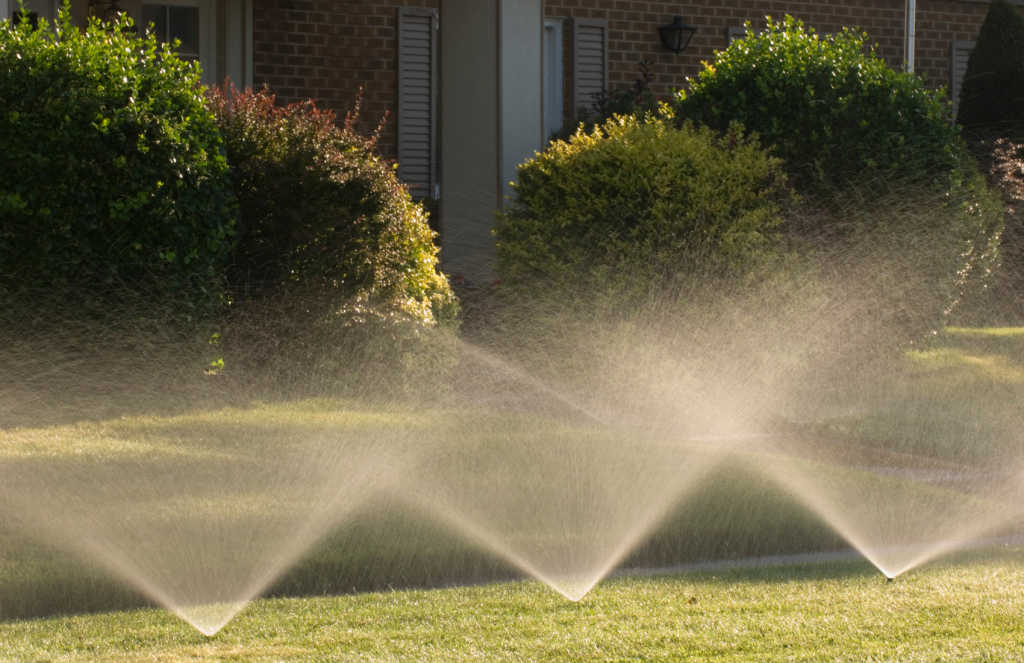
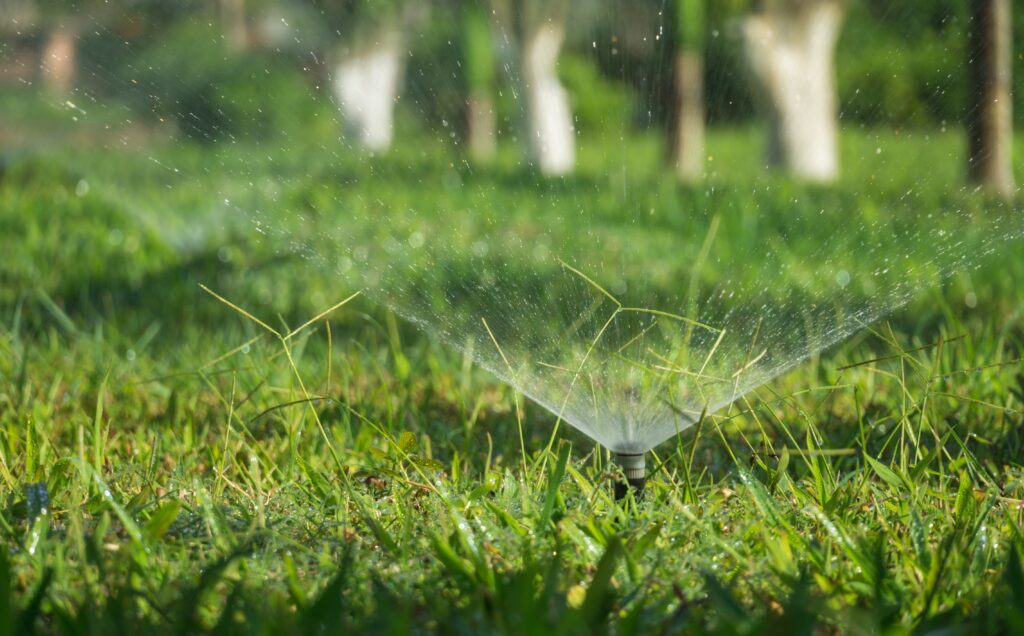
Spray head irrigation systems work best for smaller areas and spaces requiring precise water control. These systems use stationary sprinkler heads that distribute water in fixed patterns, typically covering areas from 8 to 15 feet in radius. The heads pop up from ground level when activated, then retract flush with the soil when the watering cycle completes, maintaining a clean appearance and preventing damage from mowing.
In our experience installing systems throughout the St. Louis metro area, spray heads excel in front yard areas, parkways, and smaller back lawn sections. They provide excellent coverage for areas with specific watering requirements, such as newly seeded sections or areas with different grass types. The precision control makes them ideal for properties with varied landscaping where different zones require different watering approaches.
Rotary Sprinkler Systems
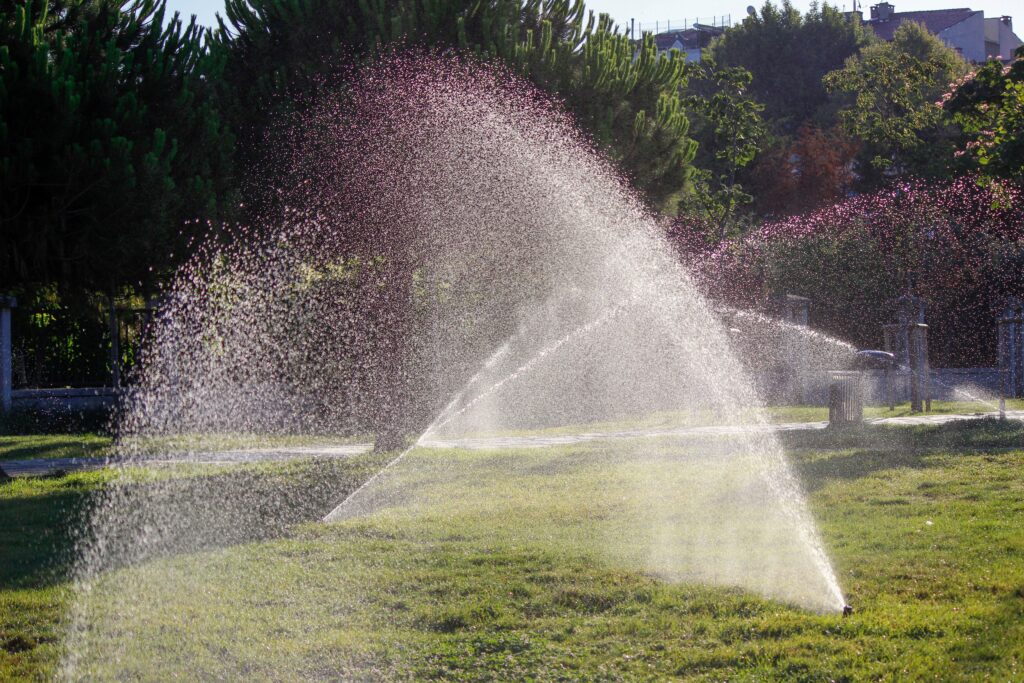
For larger lawn areas, rotary sprinkler systems provide superior coverage and efficiency. These systems use rotating heads that distribute water in slow, steady streams across distances of 25 to 50 feet or more. The rotating action ensures even distribution while allowing water time to soak into the soil rather than running off.
Rotary systems prove particularly effective in Missouri’s clay-heavy soils, which are common throughout St. Charles and Jefferson counties. The slower application rate prevents surface runoff and allows better penetration, addressing one of the most common watering challenges we encounter in local installations. Large back yards and open lawn areas benefit most from rotary coverage, providing the efficient watering that keeps extensive grass areas healthy throughout our demanding summer months.
Drip Irrigation Zones
Drip irrigation represents the most water-efficient option for flower beds, vegetable gardens, and shrub areas. Instead of spraying water through the air, drip systems deliver water directly to plant root zones through a network of tubes and emitters. This targeted approach minimizes water loss through evaporation and eliminates water waste on non-planted areas.
We typically incorporate drip zones into comprehensive irrigation designs for clients who want to maintain both lawn areas and cultivated garden spaces. The precision watering helps established plants thrive while preventing overwatering that can lead to fungal problems and root rot in garden beds.
Smart Controllers and Advanced Technology
Modern sprinkler irrigation systems increasingly incorporate intelligent technology that optimizes watering schedules based on real-time conditions. WiFi-enabled controllers allow homeowners to monitor and adjust their systems remotely through smartphone apps, providing convenient control whether they’re at home or traveling.
Weather sensors and soil moisture detection represent game-changing additions to contemporary systems. Rain sensors automatically postpone scheduled watering when natural precipitation provides adequate moisture, while soil moisture sensors monitor actual ground conditions and adjust watering duration accordingly. These smart features prevent overwatering while ensuring your landscape receives optimal care regardless of changing weather patterns.
We recently completed an installation for a client in Chesterfield that demonstrates the effectiveness of smart irrigation technology. Their previous manual watering routine consumed approximately 15,000 gallons monthly during summer months, while their new smart sprinkler irrigation system with weather monitoring uses roughly 10,500 gallons for superior results. The 30% water savings, combined with dramatically improved lawn health, paid for a significant portion of the installation cost in the first year alone.
Professional Installation Process
Understanding what goes into professional sprinkler irrigation system installation helps homeowners make informed decisions and set appropriate expectations for their projects. Our systematic approach, refined through hundreds of installations across the St. Louis metro area, ensures reliable performance and long-term satisfaction.
Initial Property Assessment and Design
Every successful irrigation project begins with a comprehensive property evaluation that goes far beyond simply measuring square footage. We analyze your landscape’s unique characteristics, including soil composition, drainage patterns, sun and shade areas, plant types, and existing plumbing infrastructure. Slope variations across your property significantly impact sprinkler placement and water pressure requirements, particularly important in areas like West County where terrain changes can be dramatic.
Water pressure testing determines the optimal number of zones and head placement for your specific property. Insufficient water pressure spread across too many heads results in poor coverage and weak performance, while too few zones can create inefficient watering patterns. We map out the most effective zone configuration during this initial assessment, ensuring each area of your landscape receives appropriate coverage without compromising system performance.
Local soil conditions play a crucial role in system design decisions. The clay-heavy soils common throughout much of St. Louis County require different approaches than the sandier compositions found in some areas. Clay soils benefit from slower application rates and longer watering cycles to prevent runoff, while sandy soils require more frequent, shorter cycles to maintain adequate moisture levels.
Permits and Local Requirements
St. Louis County and surrounding municipalities have specific requirements for irrigation system installations that professional contractors handle on your behalf. These regulations ensure proper connections to municipal water systems and prevent cross-contamination issues that could affect public water supplies.
Backflow prevention devices are mandatory components that prevent irrigation water from flowing back into your home’s potable water supply. Professional installation includes proper backflow preventer selection and testing, ensuring compliance with local codes and protecting your family’s water quality.
Underground Installation and Infrastructure
The physical installation process begins with precise marking of underground utilities to prevent damage to existing gas, electric, and telecommunications lines. Professional crews use specialized trenching equipment to create narrow channels for pipe installation, minimizing disruption to your existing landscape while ensuring proper depth and slope for optimal water flow.
PVC pipe installation requires careful attention to connection quality and proper burial depth to prevent freeze damage during Missouri winters. We bury supply lines below the frost line and install drain valves at low points to prevent water accumulation that could cause pipe damage during freezing weather. Proper pipe sizing ensures adequate water pressure reaches every sprinkler head, maintaining consistent performance across all zones.
Sprinkler Head Placement and Configuration
Strategic sprinkler head placement maximizes coverage while minimizing water waste and avoiding obstacles like trees, walkways, and structures. Head-to-head coverage ensures every area receives adequate water without creating dry spots or overwatered zones that can lead to disease problems.
Different head types serve specific purposes within the overall system design. Spray heads with various nozzle configurations handle smaller areas and provide precise coverage for shaped beds and narrow strips, while rotary heads cover larger open areas efficiently. Stream rotor technology works particularly well in windy conditions common across the St. Louis area, maintaining coverage accuracy when traditional spray patterns might be disrupted.
Controller Programming and System Testing
The final installation phase involves programming your irrigation controller for optimal watering schedules based on your landscape’s specific needs and local watering restrictions. We establish different programs for various seasons, accounting for changing daylight hours, temperature variations, and plant growth cycles throughout the year.
Comprehensive system testing ensures every zone operates correctly and provides proper coverage. We verify water pressure at each head, check for proper spray patterns, and confirm that all zones activate and shut off according to the programmed schedule. This testing phase often reveals minor adjustments needed for optimal performance, which we complete before considering the installation finished.
One common challenge we address during installation involves working around existing landscape features that homeowners want to preserve. Recent projects have required creative solutions for maintaining mature tree root systems while installing irrigation lines, and designing around established garden beds that needed continued access for seasonal planting changes.
Maintenance and Seasonal Care
A well-maintained sprinkler irrigation system can operate reliably for decades, but neglecting routine care often leads to costly repairs and poor performance. Understanding the seasonal maintenance requirements helps you protect your investment while ensuring consistent landscape results throughout the year.
Spring Startup and System Inspection
Spring activation represents the most critical maintenance period for irrigation systems in Missouri. After months of winter shutdown, systems require careful inspection and testing before resuming regular operation. We recommend professional spring startup service for the first few years after installation, allowing homeowners to learn proper procedures while ensuring no damage occurred during the dormant period.
The startup process begins with slowly restoring water pressure to the system, checking for leaks or damage that may have occurred during freezing weather. Sprinkler heads often require cleaning and adjustment after winter, as debris and settling can affect spray patterns and coverage. Pop-up heads sometimes stick in the retracted position due to dirt accumulation, requiring cleaning and lubrication to restore proper operation.
Controller programming typically needs updates for the new growing season, adjusting watering schedules for longer daylight hours and changing temperature patterns. Battery replacement in controllers and rain sensors ensures reliable operation throughout the active season, preventing system failures that could damage your landscape during critical growing periods.
Summer Monitoring and Performance Optimization
Summer operation requires ongoing attention to ensure your sprinkler irrigation system adapts to changing conditions and maintains optimal performance. Regular visual inspections help identify problems before they become serious issues, saving both water and money while protecting your landscape investment.
Watch for signs of uneven watering, such as brown patches developing in areas that should receive adequate coverage, or overly wet spots that might indicate broken heads or misaligned spray patterns. Clogged nozzles often cause irregular spray patterns that leave gaps in coverage, while damaged heads might spray in unintended directions, wasting water on sidewalks, driveways, or structures.
During extended hot periods common in St. Louis summers, you may need to adjust watering schedules to provide additional moisture without overwatering. Smart controllers with weather monitoring automatically make these adjustments, while traditional controllers require manual programming changes to account for increased evaporation rates and plant stress during heat waves.
Municipal watering restrictions sometimes require temporary schedule modifications during drought conditions. Understanding your system’s flexibility helps you comply with local ordinances while maintaining your landscape’s health through challenging periods.
Fall Preparation and Winterization
Proper winterization protects your sprinkler irrigation system from freeze damage that can result in expensive repairs and spring startup delays. Missouri’s unpredictable winter weather, with temperatures that can fluctuate dramatically, makes thorough winterization particularly important for system longevity.
The winterization process involves completely removing water from all system components that could be damaged by freezing. Professional winterization typically uses compressed air to blow water from supply lines, valve boxes, and sprinkler heads, ensuring no water remains that could expand and crack pipes or components during winter freezes.
Controller adjustments for winter include shutting down automatic programs while maintaining power to prevent internal component damage from temperature extremes. Rain sensors and soil moisture monitors often require protection or removal during winter months to prevent damage from ice accumulation.
We typically schedule winterization services in late October or early November, depending on weather forecasts and the likelihood of sustained freezing temperatures. Waiting too long risks surprise freeze events that can damage unprepared systems, while winterizing too early unnecessarily shortens the watering season during mild autumn weather.
Many homeowners ask about do-it-yourself winterization, and while some basic maintenance is possible, proper system blowout requires specialized equipment and experience. Inadequate winterization often results in hidden damage that doesn’t become apparent until spring startup, potentially causing expensive repairs that professional winterization would have prevented.
Cost Factors and Investment Value
Understanding the financial aspects of sprinkler irrigation system installation helps homeowners make informed decisions about this significant landscape investment. While costs vary based on property size and system complexity, the long-term value often justifies the initial expense through water savings, reduced maintenance time, and increased property value.
Installation costs in the St. Louis metro area typically range from $3,000 to $8,000 for most residential properties, with factors like property size, terrain complexity, and system features affecting the final price. Smaller properties with simple layouts and good water pressure fall toward the lower end of this range, while larger lots with challenging terrain, extensive landscaping, or premium smart technology components approach the higher end.
Several factors significantly impact installation pricing beyond basic property size. Difficult soil conditions, such as the rocky terrain found in some Jefferson County areas, require additional labor and specialized equipment for trenching and installation. Properties with extensive hardscaping, mature landscaping, or challenging access for installation equipment often require more time and careful work, affecting overall project costs.
System complexity plays a major role in pricing decisions. Basic timer-controlled systems with standard spray and rotary heads cost significantly less than smart irrigation systems with weather monitoring, soil moisture sensors, and smartphone control capabilities. However, the advanced features often pay for themselves through water savings and improved landscape health over time.
Long-term water savings represent one of the most compelling financial benefits of professional irrigation systems. Clients consistently report 20-40% reductions in water usage compared to manual watering methods, translating to substantial savings on utility bills. During typical St. Louis summers, these savings often amount to $500-$1,000 annually for average-sized properties, helping offset installation costs within the first few years.
Property value considerations add another dimension to the investment equation. Real estate professionals note that well-maintained landscapes contribute significantly to curb appeal and overall home value, with automated irrigation systems signaling to potential buyers that the property has been professionally maintained and upgraded. While individual results vary, comprehensive landscape improvements including irrigation often return 70-100% of their investment in increased property value.
Maintenance costs for properly installed systems remain relatively low compared to the ongoing expenses of manual watering and landscape replacement. Annual maintenance, including spring startup and fall winterization, typically costs $200-$400 annually, while avoiding the need to replace drought-damaged landscaping saves thousands of dollars over time.
When evaluating irrigation system investment, consider the total cost of landscape maintenance over time. Manual watering often leads to inconsistent results that require expensive replanting, overseeding, and plant replacement. Professional irrigation systems maintain consistent landscape health that reduces these replacement costs while providing the convenience of automated care.
Choosing the Right Irrigation Professional
Selecting the right contractor for your sprinkler irrigation system installation significantly impacts both the immediate project experience and long-term system performance. Understanding what distinguishes quality professionals from less experienced installers helps ensure your investment provides years of reliable service.
Proper licensing and insurance represent fundamental requirements for any irrigation contractor. In Missouri, irrigation system installation requires appropriate contractor licensing, and reputable companies carry comprehensive liability insurance to protect both their workers and your property during installation. Always verify licensing status and insurance coverage before allowing work to begin on your property.
Experience with local soil and climate conditions proves invaluable for irrigation system design and installation. Contractors familiar with St. Louis area clay soils, drainage challenges, and municipal water pressure variations can anticipate and address potential issues before they become problems. Ask potential contractors about their experience with properties similar to yours and their familiarity with local watering restrictions and requirements.
Quality irrigation professionals provide detailed written estimates that break down costs for materials, labor, and specific system components. Vague estimates or reluctance to explain system design choices often indicate inexperience or cost-cutting measures that may compromise system performance. Reputable contractors welcome questions about their design recommendations and can explain how their proposed system addresses your property’s specific challenges.
References from recent local installations offer valuable insights into contractor reliability and quality. Established irrigation companies should readily provide references from clients with similar projects, allowing you to verify their work quality and customer service standards. Drive by recent installations if possible to observe the quality of workmanship and landscape restoration after completion.
Warranty coverage and ongoing service availability distinguish professional irrigation companies from installers who disappear after completing projects. Comprehensive warranties should cover both materials and workmanship for reasonable periods, while established companies offer ongoing maintenance services and emergency repairs when needed.
Red flags include unusually low bids that may indicate substandard materials or corner-cutting installation methods, high-pressure sales tactics, or reluctance to provide detailed system information and references. Door-to-door sales approaches and requirements for immediate decisions often signal inexperienced or unreliable contractors.
Quality irrigation professionals take time to understand your landscape goals and provide education about system operation and maintenance. They should explain controller programming, basic troubleshooting procedures, and seasonal adjustment recommendations, ensuring you can operate your system effectively after installation completion.
Conclusion and Next Steps
A professionally designed and installed sprinkler irrigation system transforms landscape maintenance from a time-consuming chore into an automated process that delivers superior results while conserving water and protecting your property investment. The precision watering, intelligent scheduling, and adaptive technology available in modern irrigation systems provide benefits that extend far beyond simple convenience.
The decision to install an irrigation system represents an investment in your property’s long-term value and your quality of life. Consistent, appropriate watering maintains healthy landscapes that enhance curb appeal, reduce maintenance requirements, and provide the outdoor environment you envisioned when you chose your home. The water savings, reduced labor, and improved plant health typically justify the installation investment within a few years while providing decades of reliable service.
Timing considerations can affect both installation scheduling and first-year results. Spring installations allow new systems to support landscapes through the challenging summer months, while fall installations provide time for system settling and early season adjustments before peak demand periods. However, quality irrigation contractors can successfully complete installations throughout most of the year, weather permitting.
If you’re ready to transform your landscape maintenance routine while enhancing your property’s beauty and value, contact Allen Outdoor Solutions for a comprehensive irrigation consultation. Our team will evaluate your property’s unique characteristics, discuss your landscape goals, and design a sprinkler irrigation system that delivers optimal results for your specific needs and budget.
For more information about our complete range of outdoor services and to explore our landscaping portfolio, visit our website or call us directly to schedule your free consultation. Let us show you how professional irrigation system installation can revolutionize your landscape care while providing the lush, healthy outdoor spaces you’ve always wanted.
The investment in a quality sprinkler irrigation system pays dividends in time saved, water conservation, and landscape beauty for years to come. Don’t let another season pass struggling with inconsistent watering results when automated precision is within reach.